
RhoGAM Half-Life
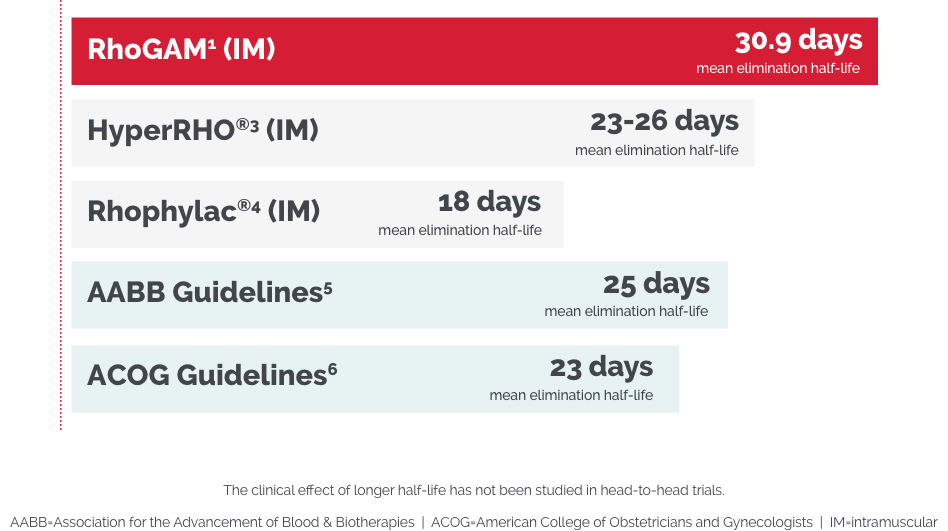
RhoGAM has the longest half-life of any anti-D product, protecting Rh-negative mothers through delivery.2,3,5 RhoGAM sets the standard with its 30.9-day half-life, which exceeds both ACOG and AABB guidelines.2,3,6
Why half-life matters
- The timing and amount of fetomaternal hemorrhage (FMH) is unpredictable and can present without clinical suspicion7,8
- There is natural individual variability in the anti-D half-life5
- The concentration of anti-D circulating in the maternal bloodstream late in the third trimester varies for each pregnancy5
- Longer half-life allows for greater residual anti-D in circulation over time5
- To reliably protect against Rh sensitization, anti-D levels must remain sufficient through delivery5,9,10
Clinical implications for protection
Assuming a 28-day half-life, the 300-µg dose of RhoGAM administered at 28 weeks is expected to provide
20-30 µg of residual anti-D in maternal circulation at delivery, when risk of sensitization is highest.5,6,9,11 With a half-life of 30.9 days, >12.5% (>37.5 µg) of anti-D could remain in circulation at week 40.2,3*
*No data, based on internal calculations. No head-to-head studies have compared the half-life or efficacy of all available anti-Ds.
Initial ACOG antenatal dosing guidelines are based on RhoGAM clinical trials, establishing the standards and clinical practice guidelines still followed today.1,2
RhoGAM should be given to an Rh-negative mother in the following clinical situations to prevent Rh immunization3:
- At 26 to 28 weeks of pregnancy
- Within 72 hours of delivery of an Rh-positive baby
- Any instance of suspected or proven exposure to Rh-positive red blood cells, such as transfusion
Residual anti-D levels decline over time following routine antepartum RhoGAM administration at 28 weeks’ gestation.1 Postpartum RhoGAM administration remains recommended when the newborn is confirmed to be Rh-positive.3
Available anti-D products
Multiple anti-D immune globulin products are available for Rh sensitization prophylaxis, and these products differ in dosing recommendations and half-life.2 View the Anti-D Comparison Chart for an overview of available products.