Q: What is Rh factor?2
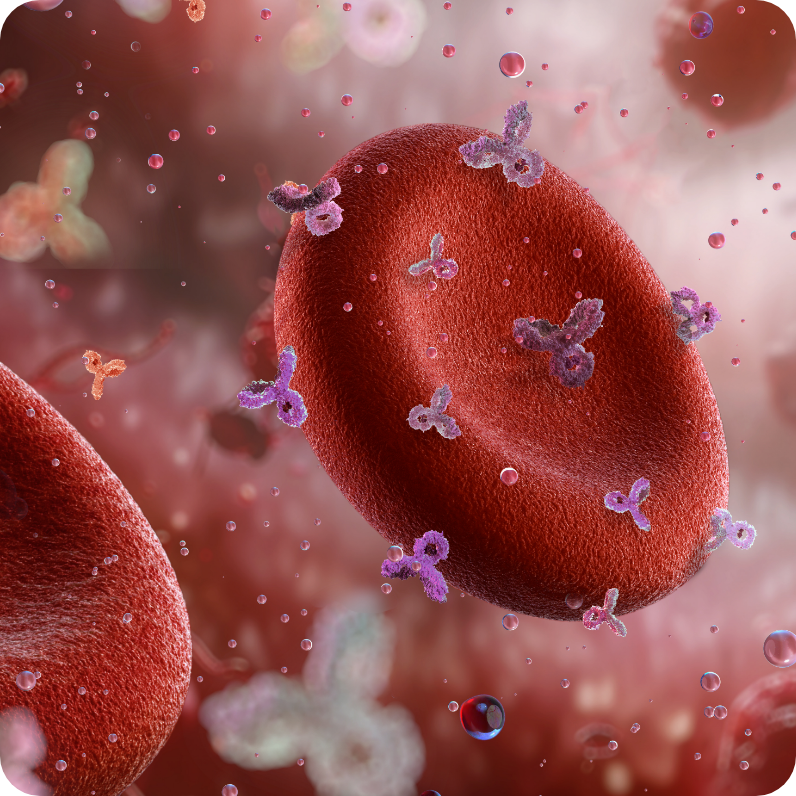
A: Rh factor is a protein found on red blood cells. Some people have it (Rh-positive) and some don't (Rh-negative).
For a deeper explanation of Rh factor, visit our Rh Factor Explained resource.
Q: What is Rh sensitization?2,3
A: Rh sensitization happens when an Rh-negative person's immune system detects Rh-positive red blood cells and then develops antibodies against them.
These antibodies don't typically affect the first baby because the body hasn't yet had time to develop an immune response strong enough to impact the current pregnancy.
Q: When can Rh sensitization occur?
A: Sensitization can occur at any time during pregnancy but most commonly during4:
- Childbirth (the most common time)
- Procedures like amniocentesis or chorionic villus sampling (CVS)
- Abdominal trauma
- Miscarriage or ectopic pregnancy
Q: What is hemolytic disease of the fetus and newborn (HDFN)?2,3
A: If a mother becomes Rh sensitized, her subsequent pregnancies could be at risk of developing HDFN.
- HDFN does not affect the mother, but it is a serious condition that affects the fetus and/or newborn
- Clinical manifestations of HDFN include congestive heart failure, hemolytic anemia, spleen and liver enlargement, severe edema, jaundice, brain damage, and fetal death
Q: How can Rh sensitization be prevented?
A: While Rh sensitization might sound scary, it can be effectively prevented. Talk to your patients about RhoGAM [Rho(D) Immune Globulin (Human)], an anti-D treatment that works by stopping their body from producing those harmful antibodies.1
It may also be helpful to explain standard preventive measures to your patients1:
- You will have a blood test early in your pregnancy to check your Rh status
- If you are Rh-negative, you will typically receive a RhoGAM shot around 26 to 28 weeks during your pregnancy
- If your baby is Rh-positive at birth, you will receive another dose of RhoGAM within 72 hours after delivery
-
You will also receive RhoGAM after any event that might cause a fetomaternal hemorrhage where your blood mixes with your baby's blood, such as
- Amniocentesis
- Chorionic villus sampling (CVS)
- Miscarriage
- Ectopic pregnancy
These preventive measures have significantly reduced the rate of Rh immunization and its associated complications.2,4,5
Q: What if an Rh-sensitized mother becomes pregnant?
A: Once sensitization has occurred, the anti-D cannot reverse the process because it works by preventing the mother from making Rh antibodies.1 In these situations, healthcare providers focus on carefully monitoring the pregnancy to assess the risk of HDFN and manage the pregnancy accordingly.3
Through prevention of Rh sensitization and careful management of sensitized pregnancies, you help support healthy outcomes for both mother and baby.