Request a Rep

Rh Factor &
the D antigen

The Rh factor is part of a system of antigens found on the surface of red blood cells. The D antigen is one of the most common antigens within the Rhesus system. When the D antigen is absent, an individual is classified as Rh-negative.1,2

Approximately 15% of women are Rh-negative3
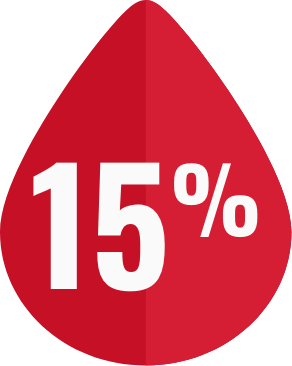
Red blood drop icon labeled 15 percent representing Rh-negative prevalence

What Is Rh Sensitization?

Red line icon of a blood drop representing bleeding or blood loss

Rh sensitization can occur when fetomaternal hemorrhage (FMH) causes the fetus’s Rh-positive blood to mix with the mother’s Rh-negative blood.2,3

Red antibody icon representing immune response and Rh antibodies

The mother’s body mounts an immune response, creating antibodies against the Rh-positive red blood cells.2,3

Red icon of a single baby representing newborn protection

These antibodies don’t typically affect the first baby because the body hasn’t yet had time to mount an immune response strong enough to impact the current pregnancy.2

Red icon of two babies representing multiple protected infants

But once the mother is sensitized, future Rh-positive babies are at risk for developing hemolytic disease of the fetus and newborn (HDFN).2,3

Rh Sensitization of the Mother May Lead to HDFN3

Clinical manifestations of HDFN3-5

Red line icon of a heart representing cardiac complications

Congestive Heart Failure

Red line icon of fragmented red blood cells representing hemolytic anemia

Hemolytic Anemia

Red line icons of spleen and liver representing organ involvement

Spleen and Liver Enlargement

Red hand icon representing clinical action or intervention

Severe Edema

Red eye icon representing monitoring and awareness

Jaundice

Red icon of a single baby representing newborn protection

Fetal Death

Red line icon of a brain representing neurologic effects

Brain Damage

It is vital to be proactive when it comes to HDFN and Rh sensitization prevention. Receiving both doses of RhoGAM reduces your patients’ risk of Rh sensitization from 14-16% to less than 0.1%6-8

How to explain Rh Factor
References: 1. Rosenkrans D, Zubair M, Doyal A. Rh blood group system. StatPearls [Internet]. August 2, 2023. Accessed November 13, 2025. https://‌www.ncbi.nlm.nih.gov/‌books/‌NBK594252 2. Bowman JM. The prevention of Rh immunization. Transfus Med Rev. 1988;2(3):129-150. 3. Rubin R , Strayer DS. Rubin’s Pathology: Clinicopathologic Foundations of Medicine. 6th ed. Lippincott Williams & Wilkins: 2012; 260-262. 4. Bowman JM. Antenatal suppression of Rh alloimmunization. Clin Obstet Gynecol. 1991;34:296-303. 5. Turgeon ML. Hemolytic disease of the newborn. In: Turgeon ML, ed. Fundamentals of Immunohematology: Theory and Technique. Lea & Febiger; 1989: 321-343. 6. Hartwell EA; American Society of Clinical Pathologists. Use of Rh immune globulin: ASCP practice parameter. Am J Clin Pathol. 1998;110(3):281-292. 7. Bowman JM, Pollock JM. Antenatal prophylaxis of Rh isoimmunization: 28-weeks’-gestation service program. Can Med Assoc J. 1978;118(6):627-630. 8. Bowman JM, Chown B, Lewis M, Pollock JM. Rh isoimmunization during pregnancy: antenatal prophylaxis. Can Med Assoc J. 1978;118(6):623-627.

Indication

  • RhoGAM® Ultra-Filtered PLUS [Rho(D) Immune Globulin (Human)] (300 μg) is an immune globulin indicated for use in preventing Rh immunization for pregnancy and other obstetrical conditions in Rh-negative women unless the father or baby is conclusively Rh-negative, e.g., delivery of an Rh-positive baby irrespective of the ABO groups of the mother and baby, any antepartum fetal-maternal hemorrhage (suspected or proven), actual or threatened pregnancy loss at any stage of gestation and ectopic pregnancy.
  • Prevention of Rh immunization in any Rh-negative person after incompatible transfusion of Rh-positive blood or blood products.
  • In the case of postpartum use, RhoGAM is intended for maternal administration. Do not inject the newborn infant.

Important Safety Information

  • RhoGAM is contraindicated in Rh-positive individuals and in patients with a known history of anaphylactic or severe systemic reactions to the administration of human immune globulin products.
  • Severe hypersensitivity reactions may occur with the use of RhoGAM. RhoGAM should be administered in a setting where appropriate equipment, medications such as epinephrine, and personnel trained in the management of hypersensitivity, anaphylaxis, and shock are available.
  • RhoGAM contains a small quantity of IgA. There is a potential risk of hypersensitivity in IgA deficient individuals. Although high doses of intravenous immune globulin containing IgA at levels of 270-720 μg/mL have been given without incident during treatment of patients with high-titer antibodies to IgA, the attending physician must weigh the benefit against the potential risks of hypersensitivity reactions.
  • Products made from human blood may carry a risk of transmitting infectious agents (e.g., viruses, the variant Creutzfeldt-Jakob disease [vCJD] and, theoretically, the Creutzfeldt-Jakob disease [CJD] agent).
  • After administration of Rho(D) immune globulin, a transitory increase of various passively transferred antibodies in the patient’s blood may yield positive serological testing results.
  • The most frequently reported adverse reactions in patients receiving Rho(D) Immune Globulin (Human) products are injection site reactions, such as swelling, induration, redness and mild pain or warmth. Possible systemic reactions are skin rash, body aches or a slight elevation in temperature. Severe systemic reactions include allergic reactions and hemolytic reactions.

You are encouraged to report negative side effects of prescription drugs to the FDA. Visit www.fda.gov/medwatch or call 1-800-FDA-1088.

Please click here for full Prescribing Information.

This site is intended for residents of the US only.