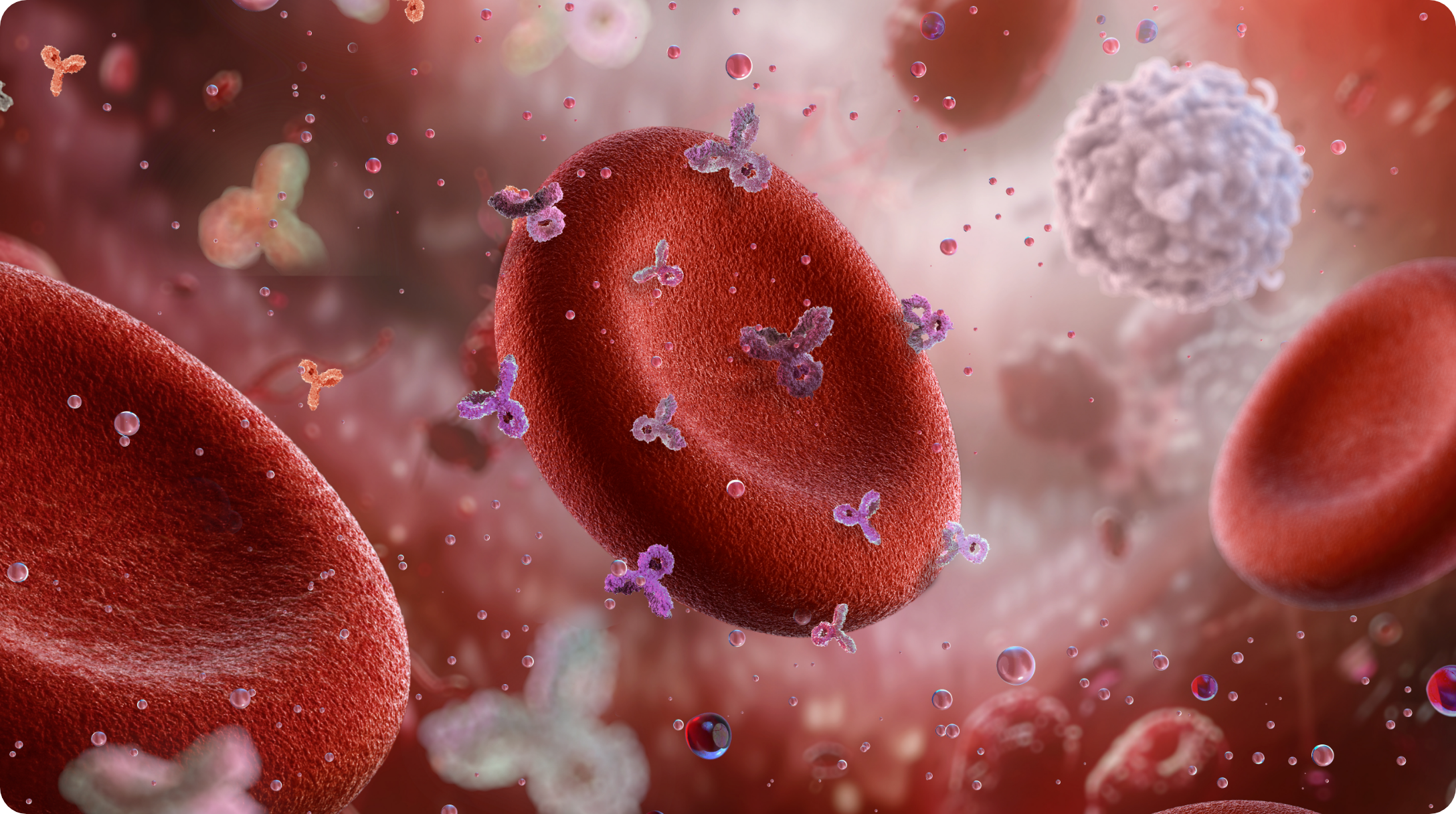
How does RhoGAM work to protect against Rh sensitization and HDFN?
RhoGAM is an immune globulin containing human immunoglobulin G (IgG) anti-D antibodies that work to prevent Rh immunization in pregnancy and other obstetric conditions.2 This prevents your patient's immune system from reacting to Rh-positive red blood cells from her baby.2
When an Rh-negative mother is exposed to Rh-positive fetal red blood cells (for example, during pregnancy or delivery), her body might see these Rh-positive red blood cells as “foreign” and start creating its own antibodies against them.3 This initial immune response isn't strong enough to impact the first pregnancy, but these antibodies can cause problems in future pregnancies.4
RhoGAM provides passive anti-D antibodies that suppress maternal Rh sensitization, thereby reducing the risk of Rh-associated hemolytic disease of the fetus and newborn (HDFN) in future pregnancies.2
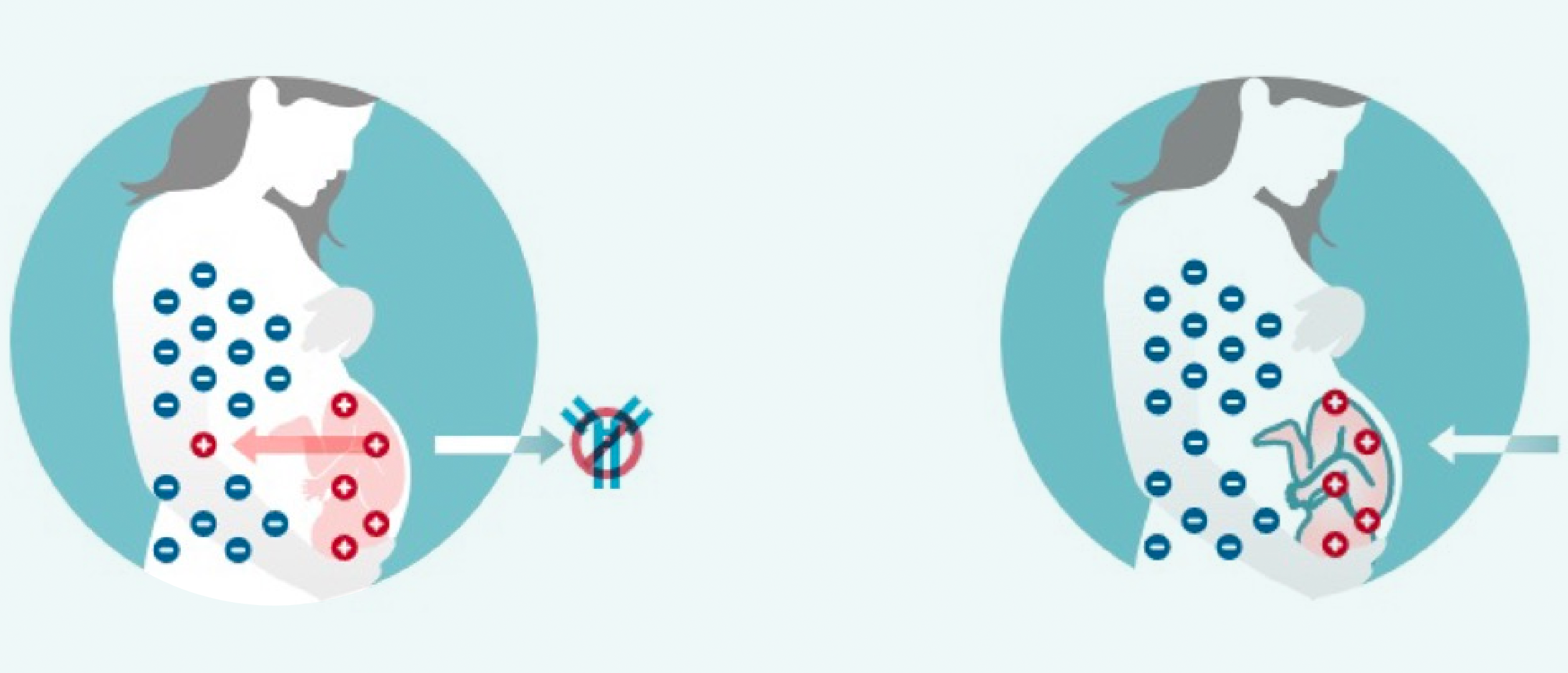
Is RhoGAM effective if the mother already has Rh antibodies?
If a mother has already developed Rh antibodies (ie, has become sensitized), RhoGAM is not effective in altering the course or consequences of Rh sensitization.2
Why is RhoGAM considered the trusted standard?
- RhoGAM is the first anti-D approved by the FDA, protecting Rh-negative mothers since 19681,2,5
- RhoGAM clinical trials helped set the standards and ACOG clinical practice guidelines that are still followed today5-8
- Year after year, RhoGAM continues to be the most trusted anti-D2,9,10
RhoGAM has the longest half-life of any anti-D product*
RhoGAM's 30.9-day half-life exceeds both ACOG and AABB guidelines, ensuring residual anti-D remains in circulation through delivery.1,2,8 Because fetomaternal hemorrage (FMH) can occur unpredictably and anti-D half-life varies between individuals, even when anti-D levels vary, Rh-negative mothers remain protected through delivery due to RhoGAM's 30.9-day half-life.11-13
*Clinical effect of longer half-life has not been studied in head-to-head trials.