Request a Rep

Life stories begin
with RhoGAM

The original Rh-negative breakthrough that continues to protect generations of babies1-4
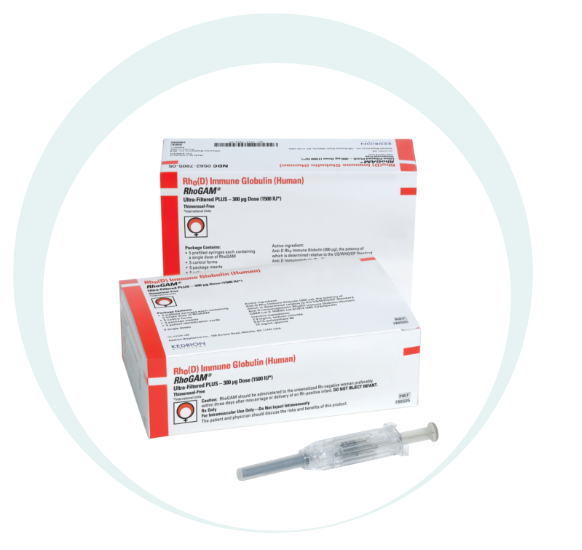
RhoGAM Ultra-Filtered PLUS packaging with prefilled syringe

RhoGAM Ultra-filtered PLUS (Rh0[D]) Immune Globulin (Human) is a prescription medicine given by intramuscular injection that is used to prevent Rh sensitization in Rh-negative expectant mothers.5

RhoGAM may help protect your Rh-negative pregnant patients from Rh sensitization. During pregnancy, Rh sensitization of the mother may lead to hemolytic disease of the fetus and newborn (HDFN) in future pregnancies.5

When to Administer RhoGAM

Routine Rh sensitization prevention5

If the father or the baby is not conclusively shown to be Rh-negative, RhoGAM should be given to an Rh-negative mother in the following clinical situations to prevent Rh immunization:

  • At 26 to 28 weeks of pregnancy
  • Within 72 hours of delivery of an Rh-positive baby
Administration Guide

Other times of prevention5

  • Maternal or fetal bleeding during pregnancy from certain conditions
  • Actual or threatened pregnancy loss at any stage
  • Ectopic pregnancy
  • Amniocentesis
  • Chorionic villus sampling (CVS)
  • Manipulative procedures
  • Other obstetrical trauma
Administration Video

A 300 µg syringe neutralizes up to 15 mL Rh-positive red blood cells (RBCs)—the equivalent of 30 mL fetal whole blood5
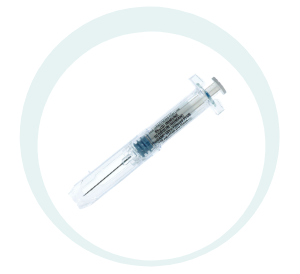
RhoGAM prefilled syringe on light circular background

RhoGAM is intended for maternal use only and should not be administered to the newborn infant.

Additional doses of RhoGAM are indicated when the patient has been exposed to more than 15 mL of Rh-positive red blood cells. This may be determined by use of qualitative or quantitative tests for fetal maternal hemorrhage.

For complete dosing and administration information, click here for the RhoGAM Full Prescribing Information.

Committed to User Safety

Features you can count on1,5
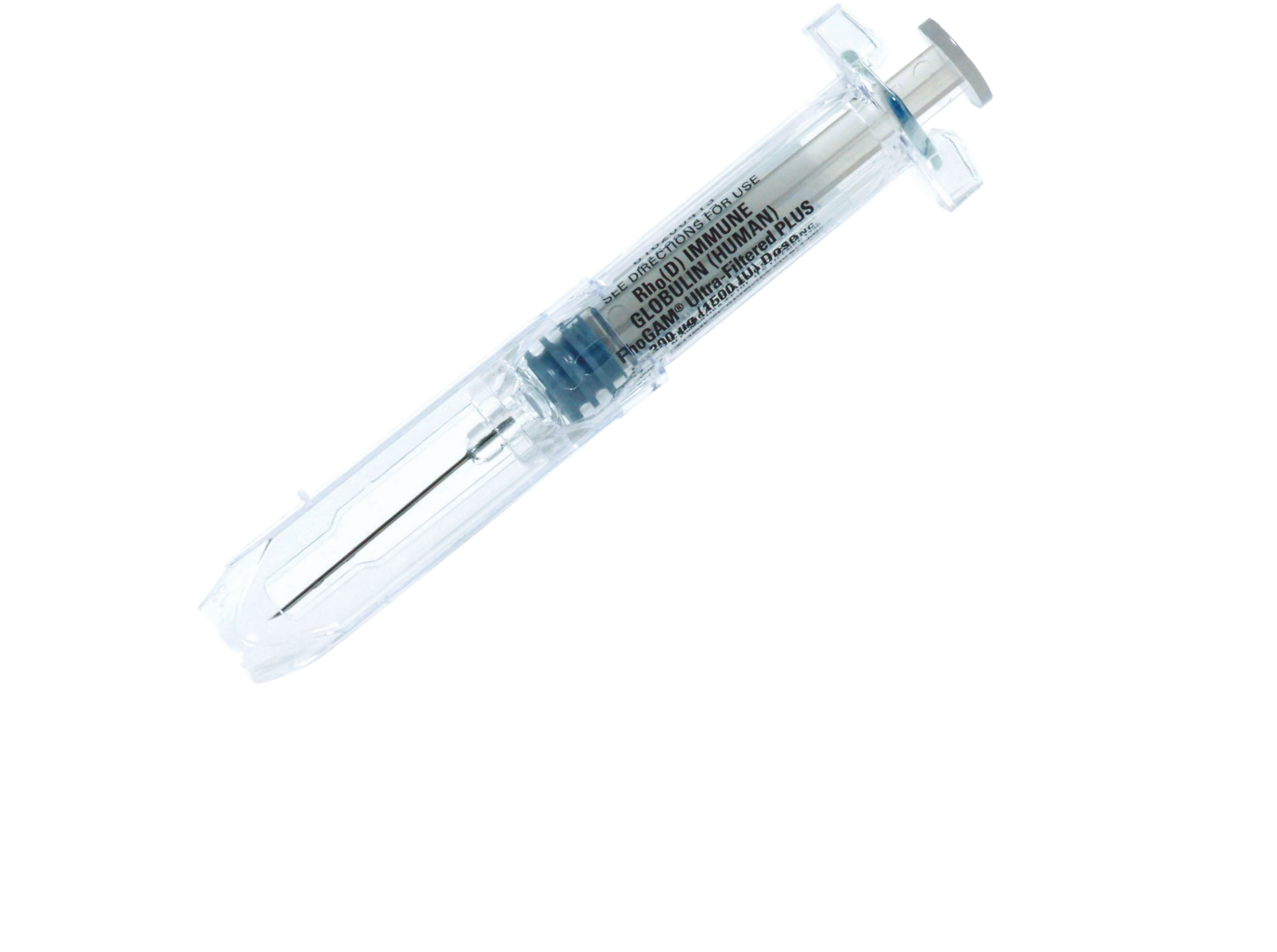
RhoGAM prefilled syringe with safety shield and dosing details Syringe with feature callouts Syringe with feature callouts Syringe with feature callouts

No temperature restrictions

Can be administered right out of the refrigerator

No light protection required

1 mL fill volume of 0.5 to 1.2 mL range

Each single-dose prefilled syringe contains 300 µg (1500 IU) of Rh0(D) Immune Globulin (Human)

Not all anti-Ds have the same administration protocols5

References: 1. Data on file. Kedrion Biopharma Inc. 2. Bowman JM. The prevention of Rh immunization. Transfus Med Rev. 1988;2(3):129-150. 3. Hartwell EA; American Society of Clinical Pathologists. Use of Rh immune globulin: ASCP practice parameter. Am J Clin Pathol. 1998;110(3):281-292. 4. Bowman JM, Pollock JM. Antenatal prophylaxis of Rh isoimmunization: 28-weeks’-gestation service program. Can Med Assoc J. 1978;118(6):627-630. 5. RhoGAM Ultra-filtered PLUS [prescribing information]. Kedrion Biopharma Inc. 2024. 6. Aitken SL, Tichy EM. Rh(O)D immune globulin products for prevention of alloimmunization during pregnancy. Am J Health Syst Pharm. 2015;72(4):267-276.

Indication

  • RhoGAM® Ultra-Filtered PLUS [Rho(D) Immune Globulin (Human)] (300 μg) is an immune globulin indicated for use in preventing Rh immunization for pregnancy and other obstetrical conditions in Rh-negative women unless the father or baby is conclusively Rh-negative, e.g., delivery of an Rh-positive baby irrespective of the ABO groups of the mother and baby, any antepartum fetal-maternal hemorrhage (suspected or proven), actual or threatened pregnancy loss at any stage of gestation and ectopic pregnancy.
  • Prevention of Rh immunization in any Rh-negative person after incompatible transfusion of Rh-positive blood or blood products.
  • In the case of postpartum use, RhoGAM is intended for maternal administration. Do not inject the newborn infant.

Important Safety Information

  • RhoGAM is contraindicated in Rh-positive individuals and in patients with a known history of anaphylactic or severe systemic reactions to the administration of human immune globulin products.
  • Severe hypersensitivity reactions may occur with the use of RhoGAM. RhoGAM should be administered in a setting where appropriate equipment, medications such as epinephrine, and personnel trained in the management of hypersensitivity, anaphylaxis, and shock are available.
  • RhoGAM contains a small quantity of IgA. There is a potential risk of hypersensitivity in IgA deficient individuals. Although high doses of intravenous immune globulin containing IgA at levels of 270-720 μg/mL have been given without incident during treatment of patients with high-titer antibodies to IgA, the attending physician must weigh the benefit against the potential risks of hypersensitivity reactions.
  • Products made from human blood may carry a risk of transmitting infectious agents (e.g., viruses, the variant Creutzfeldt-Jakob disease [vCJD] and, theoretically, the Creutzfeldt-Jakob disease [CJD] agent).
  • After administration of Rho(D) immune globulin, a transitory increase of various passively transferred antibodies in the patient’s blood may yield positive serological testing results.
  • The most frequently reported adverse reactions in patients receiving Rho(D) Immune Globulin (Human) products are injection site reactions, such as swelling, induration, redness and mild pain or warmth. Possible systemic reactions are skin rash, body aches or a slight elevation in temperature. Severe systemic reactions include allergic reactions and hemolytic reactions.

You are encouraged to report negative side effects of prescription drugs to the FDA. Visit www.fda.gov/medwatch or call 1-800-FDA-1088.

Please click here for full Prescribing Information.

This site is intended for residents of the US only.