What is HDFN?
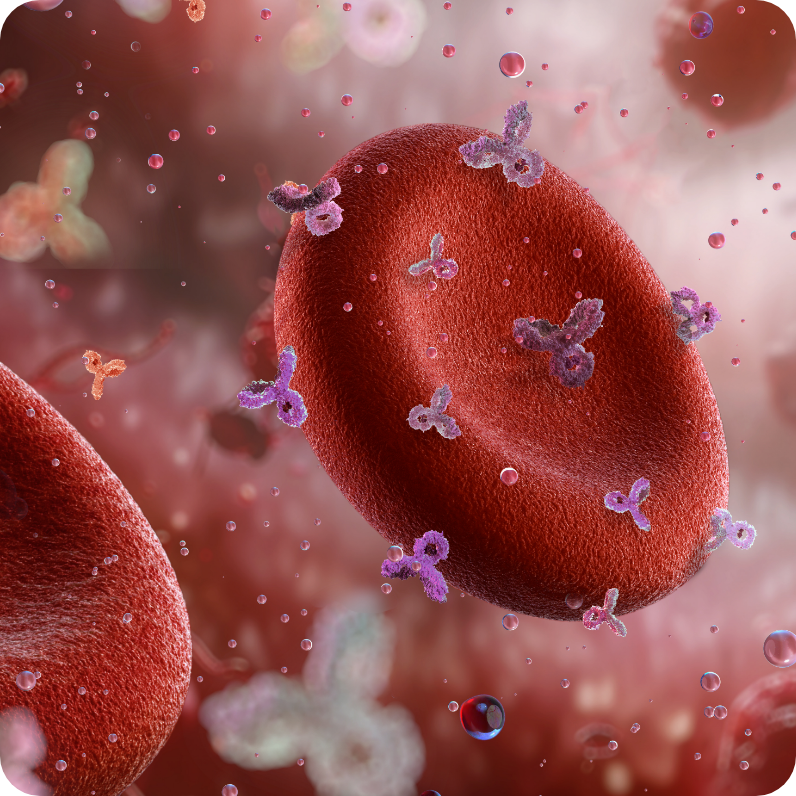
HDFN is a condition resulting from the destruction of fetal or newborn red blood cells by maternal antibodies, as a result of Rh sensitization.1,2 The resulting hemolysis may range from mild to severe and can lead to anemia and other severe clinical complications.1
HDFN can be caused by Rh sensitization
Sensitization can occur when fetomaternal hemorrhage (FMH) causes the fetus’s Rh-positive blood to mix with the mother’s Rh-negative blood.2,3 The mother’s body mounts an immune response, creating antibodies against the Rh-positive red blood cells due to this Rh blood group incompatibility.2,3 These antibodies don’t typically affect the first baby because the body hasn’t yet had time to mount an immune response strong enough to impact the current pregnancy.3 But once the mother is sensitized, future Rh-positive babies are at risk for developing HDFN.2,3
Symptoms and complications of HDFN in pregnancy and at birth
Clinical manifestations of HDFN include congestive heart failure, hemolytic anemia, spleen and liver enlargement, severe edema, jaundice, brain damage, and fetal death.2
During pregnancy/fetal manifestations2:
- As hemolysis occurs, the fetus may develop anemia
- Severe edema due to congestive heart failure caused by severe anemia
- Severely affected fetuses may develop hepatosplenomegaly and generalized edema (anasarca)
After birth (neonatal HDFN)2:
- Affected newborns may develop jaundice and hyperbilirubinemia
- Kernicterus, or bilirubin encephalopathy, is a neurologic condition associated with severe jaundice
- The liver and spleen may enlarge because of extramedullary hematopoiesis in the liver, spleen, lymph nodes and other sites
Reduced HDFN with anti-D
Anti-D products like RhoGAM [Rho(D) Immune Globulin (Human)] (300 µg) are administered to Rh-negative mothers at key points during and after pregnancy to prevent sensitization.1,4
RhoGAM is a passive Rh antibody that neutralizes any Rh-positive blood that has entered the mother's circulation.5 This prevents the Rh-negative mother from making antibodies that could cause HDFN in future pregnancies.3,4
As long as the Rh-negative mother receives RhoGAM appropriately during every pregnancy, her babies are at very low risk of developing HDFN.1,5
It is vital to be proactive when it comes to HDFN and Rh sensitization prevention. Receiving both doses of RhoGAM reduces your patients' risk of Rh sensitization from 14-16% to less than 0.1%.1,3,7
Understanding the causes of HDFN, along with its signs and potential complications, is essential for timely prevention and management. Through the appropriate use of anti-D, healthcare professionals can help protect Rh-incompatible pregnancies from Rh sensitization and its serious consequences.