Q: Why do I need this blood test?
A: This blood test checks if you're Rh-negative and helps determine if you may need treatment called anti-D to prevent Rh sensitization, which may put future Rh-positive pregnancies at risk for hemolytic disease of the fetus and newborn (HDFN).1
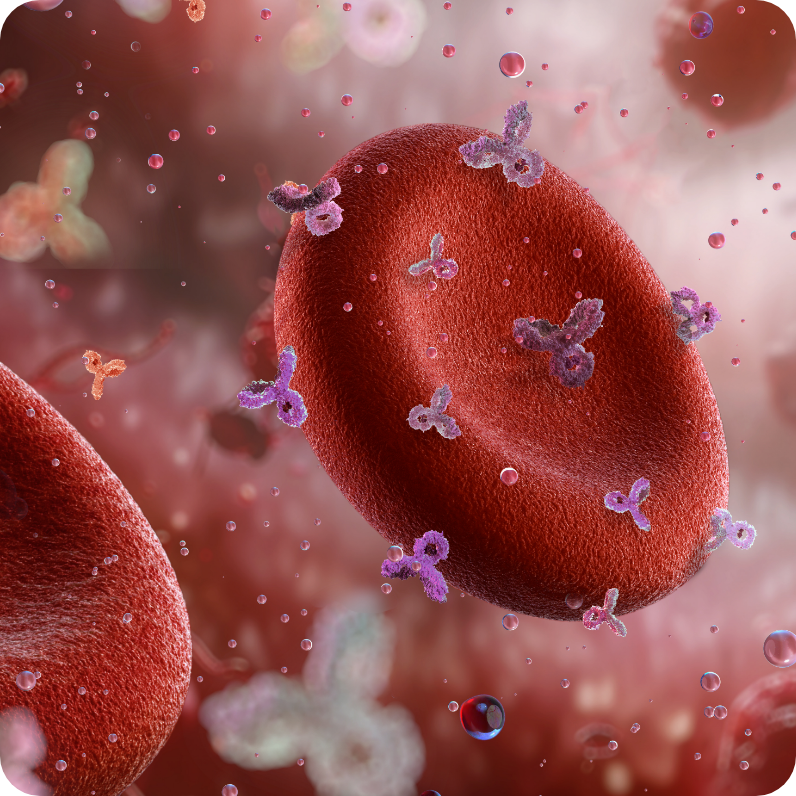
If not treated with an anti-D product, an Rh-negative mother carrying an Rh-positive baby may produce an immune response called Rh sensitization. This puts all future Rh-positive babies at risk of developing HDFN, a condition where the mother's antibodies attack the red blood cells of the fetus, which can cause serious illness or even fetal death if untreated.1
Q: What does it mean to be Rh-negative?
A: Most patients first learn they are Rh-negative during prenatal testing and may wonder if it means something is wrong. It's completely normal to feel unsure about what that means, but being Rh-negative isn't harmful to your overall health.
Here's a quick explanation2:
- The Rh factor is a protein found on red blood cells
- Some people have it (Rh-positive) and some don't (Rh-negative)
- It doesn't affect overall health
- It matters during pregnancy if a mother is Rh-negative and the baby is Rh-positive
About 15% of people in the US are Rh-negative, so patients may be reassured that Rh negativity is relatively common, and Rh incompatibility between the mom and fetus is easily manageable.1
Q: How does RhoGAM work? Is it a vaccine?
A: RhoGAM is not a vaccine; it is an injection given to Rh-negative mothers, typically between 26 and 28 weeks of pregnancy and again after delivery if the baby is Rh-positive.3
- RhoGAM prevents an Rh-negative pregnant mother from making antibodies during pregnancy that could cause HDFN in future pregnancies3
- The first FDA-approved anti-D product that continues to protect generations of babies4-7
- Has the longest half-life of any other anti-D product available, ensuring protection through delivery3,8
- It stops your body from making antibodies that could affect this baby or any future baby3
Q: What happens if I don't want RhoGAM?
A: If an Rh-negative mother carries an Rh-positive baby, this is called Rh incompatibility, and there is a risk of Rh sensitization. This occurs when1:
- Baby's blood may mix with mom's blood
- Mom's body sees the baby's Rh-positive blood as a foreign invader and mounts an immune response, which involves developing antibodies
- Rh incompatibility does not typically affect mom's first baby because her body does not have time to produce enough antibodies
- If sensitization occurs, any future baby can be at risk of developing HDFN